If you have books piling up around the house and want to turn them into…

How to Sell on Etsy in the UK Without Wasting Time or Money
If you have been thinking about selling on Etsy but keep putting it off because you are not sure where to start, this article is for you.
It will walk you through the whole process from picking a product to getting your first sale, with honest UK numbers, real costs and none of the usual vague “just follow your passion” advice that helps nobody.
Whether you want a side income from handmade items or a proper online business, here is how to do it without burning through cash or weeks of planning.
Key Takeaways
- Start with one clear product idea that Etsy actually allows, then open your Etsy shop and list it within a couple of days rather than planning for months.
- Understand the main Etsy costs in pounds, including the listing fee, transaction fee, payment processing fees and any additional fees, so you price for profit from day one.
- Use simple Etsy SEO, honest photos and great customer service to get your first sales, then scale with Etsy Ads, offsite ads and social media only once your basics work.
1. Decide What You Will Sell on Etsy (and Check It Is Allowed)
Before you worry about logos, shop banners or colour schemes, you need one clear product idea. Setting a clear product niche helps your shop attract targeted buyers and makes everything else easier, from writing titles to pricing to knowing who your customers are.
Etsy allows selling in three main categories: handmade goods you create yourself, vintage items at least 20 years old, and craft supplies such as fabric, beads or blanks for other makers. All products must be made, designed or sourced by the seller. Popular categories include handmade jewellery, home décor, personalised gifts and hair accessories.
Here are a few concrete examples. Handmade soy candles you pour yourself, personalised pet tags you engrave, 2004 Y2K clothing that qualifies as vintage, and yarn or linocut blocks sold as craft supplies or party supplies for other creators.
One thing to be blunt about: you cannot buy cheap bulk goods from AliExpress or Amazon, repackage them and list them as “handmade.” Etsy has been actively closing those shops throughout 2024 to 2026. If you use a production partner like a print on demand company, that is allowed only if the design is your own original work, and you must disclose the partner.
Try writing one sentence: “I sell personalised baby milestone cards for new parents in the UK.” That kind of focus helps later with Etsy SEO, branding and pricing. Stick to that one niche at the start rather than listing ten random product types.
2. Set Up Your Basic Business Foundations
A tiny bit of admin now stops money and tax headaches later. Think of it as laying a quick foundation so your Etsy business does not wobble when it starts growing.
Open a separate bank account or savings pot just for your Etsy income and expenses. This makes your payment account easy to understand come tax time, and you will thank yourself in January.
UK tax applies even to hobby income. There is a trading allowance of £1,000 per year; if your total self employment receipts stay below that, you do not need to register. Once you go over, register as self employed with HMRC and file a Self Assessment return. Tax is calculated on profit (income minus expenses), so keeping track of costs matters.
If you plan to sell candles, skincare, toys or food, check the safety and labelling rules for your product. Candles with fragrance need CLP labels. Cosmetics need a responsible person, ingredient lists and batch numbers. All consumer products must meet UK General Product Safety Regulations. Speak to a professional if you are unsure about licences or insurance.
Start a simple spreadsheet from day one to record materials, postage, listing fees, Etsy Ads spend and any additional fees. You will need this for pricing and for your tax return.
3. Create Your Etsy Account and Open Your Etsy Shop
Opening an Etsy account is free and takes under 30 minutes on a desktop web browser or laptop. You do not pay a subscription. Here is how it works.
Go to Etsy.com, click “Sign in” then “Register”, and create an account with your email and a password. If you are an existing Etsy member who has bought things before, you can use the same account. Once logged in, click “Sell on Etsy” to begin your shop setup.
Set your shop preferences to match the UK. Choose your shop country as United Kingdom, your shop language as English, and your shop currency as GBP. This avoids unnecessary currency conversion fees later.

Next, choose your shop name. It must be unique on Etsy, easy to spell and ideally tied to your niche. “WildflowerPrintsUK” tells buyers what you sell. “JanesShop2026” does not. You can change your shop name later, but getting it right now saves confusion. Check that your chosen name does not clash with existing trademarks.
Add your first product listing to open your shop. You only need one listing to get started, so do not wait until you have 50 products ready. Customise your shopfront with a shop banner and a short “about” section so potential customers know who you are and what you make.
4. Set Up Payments, Billing and Your Etsy Payment Account
Etsy cannot pay you until your payment account and bank details are in place. This is also where Etsy charges come out, so get it sorted before your first sale.
In your shop manager, go to Finances and add your payment account. Choose your business type (sole trader for most new UK sellers), enter your legal name, address and UK bank account details so payouts can be sent to your bank account.
Etsy Payments is the secure payment system that handles buyer transactions. It lets your customers pay by credit or debit card, debit card, Apple Pay, Google Pay and Etsy gift cards, which means you accept payments from customers worldwide without any extra setup.
You also need to add a debit or credit card as a billing method. Etsy uses this to charge your listing fees, transaction fees, advertising costs and any additional fees each month. Make sure the card stays valid or your account can be restricted.
Etsy now requires identity verification for new sellers. You may need to upload a passport or driving licence plus a selfie. This can take a day or two to process, so do not panic if payouts are held briefly at the start.
Once your Etsy shop grows, keep an eye on VAT. The UK threshold for VAT registration is £85,000 in gross taxable turnover. Below that you do not need to register, but talk to an accountant if you are heading that way.
5. Work Out the Real Cost of Selling on Etsy (and Price for Profit)
Etsy is not free to use. Understanding and calculating your costs before setting prices is the difference between making money and quietly losing it. Here are the main Etsy fees for UK sellers in 2026.
| Fee type | Amount | When it applies |
|---|---|---|
| Listing fee | £0.15 per listing | Every 4 months or on renewal/sale |
| Transaction fee | 6.5% of total sale | On each sale (item + postage + gift wrap) |
| Payment processing | 4% + £0.20 per order | On each sale via Etsy Payments |
| Regulatory operating fees | 0.48% of order total | On each sale |
| Offsite ads | 12% or 15% | Only if sale comes from Etsy’s external ads |
| Currency conversion | ~2.5% | Only if listing/payout currencies differ |
Listing fees are charged every four months whether or not the item sells, and again when a listing auto renews after a sale.
Here is a worked example. You sell a £20 print with £2.50 postage. The fee base is £22.50.
- Transaction fee: 6.5% of £22.50 = £1.46
- Payment processing fee: 4% of £22.50 + £0.20 = £1.10
- Regulatory fee: 0.48% of £22.50 = £0.11
- Listing fee: £0.15
Total Etsy charges on that sale: roughly £2.82. Add your materials, packaging, actual postage and time, and you can see how a £20 item can leave you with very little if you have not priced carefully. On very low cost items (£5 to £10), the fixed £0.20 per order takes an even bigger bite.
6. Choose a Simple Pricing Strategy That Covers Your Costs
Copying the cheapest sellers and undercutting everyone is how many new Etsy sellers burn out. If you sell a handmade mug for £8 that costs you £3 in materials, £1.50 in postage, £1 in packaging and roughly £1.50 in Etsy fees, you are working for about £1 before you count your time. That is not a business.
Use this easy formula: materials plus your time plus packaging plus postage plus Etsy fees plus a profit margin equals your minimum price.
Time yourself making one item and pay your own time at least the UK minimum wage as a starting point. Even digital products take hours in design, mock-ups and customer support. Check what other sellers charge in your niche. If similar quality personalised necklaces sell for £40 to £60, pricing yours at £20 may signal low quality rather than a bargain.
For print on demand or digital downloads, the material cost is low but the upfront work is real. Factor in software costs, licensing and the time you spend on customer messages and revisions.
7. Create Strong Product Listings That Convert
Each Etsy listing is its own mini sales page. One brilliant listing will outperform ten rushed ones every time. Having multiple strong listings also improves your overall Etsy search performance.
High quality photos have a direct impact on purchase decisions. Use all available photo slots with clear, well lit images showing your product from several angles and in real life use. You do not need a professional camera; a smartphone and natural light work well. Avoid dark photos or cluttered backgrounds.

Write honest, descriptive product descriptions covering size in centimetres, materials, colours, variations, care instructions and dispatch times. Use plain everyday language. Descriptive product descriptions build trust with buyers and reduce returns.
Include keyword rich titles in your listings. Use phrases real people would search, such as “personalised silver name necklace UK” rather than just “pretty necklace.” This is one of the easiest wins for Etsy SEO.
Add a short video if you can, even a simple 10 second clip showing the item in someone’s hand. Etsy highlights listings with video. Set clear shop policies on returns, processing times and custom orders, and link them in your listings. Sellers should establish clear shop policies for returns, exchanges and shipping to avoid disputes and build confidence.
8. Learn the Basics of Etsy SEO So Buyers Can Find You
Etsy SEO simply means helping Etsy search match your products to the right buyers. It is not complicated tech work.
Start with a few main keyword phrases per product and put them near the beginning of your listing title. The first few words carry more weight than later ones. Use the same phrases naturally in your description.
Use all 13 tags that Etsy gives you for each listing. Every tag slot is a chance to be found by a different search phrase. Mix phrases about material, style, occasion, recipient and location. For example, “teacher thank you gift”, “minimalist wall art” or “handmade sterling silver ring UK.”
To find good phrases, type words into the Etsy search bar and see what autocompletes. Check Google Trends for seasonal keywords like “Mother’s Day gifts UK.” Using all 13 tags improves product search visibility, so never leave any blank.
Etsy search also looks at click through rate, favourites and reviews. That means improving your photos and customer experience helps your Etsy SEO over time, not just your keywords. More advanced Etsy SEO can come later once you have a few sales and some data to work with.
9. Set Up Shipping, Packaging and Delivery Times
Slow or unclear shipping is one of the fastest ways to lose Etsy sales and pick up low star reviews.
Set up Etsy postage profiles in your shop manager to save time. Create profiles for UK, Europe and international orders based on weight and parcel size. Invest in a small digital scale (under £10) so you can work out Royal Mail or courier shipping costs accurately rather than guessing. Underestimating shipment costs kills your margin.
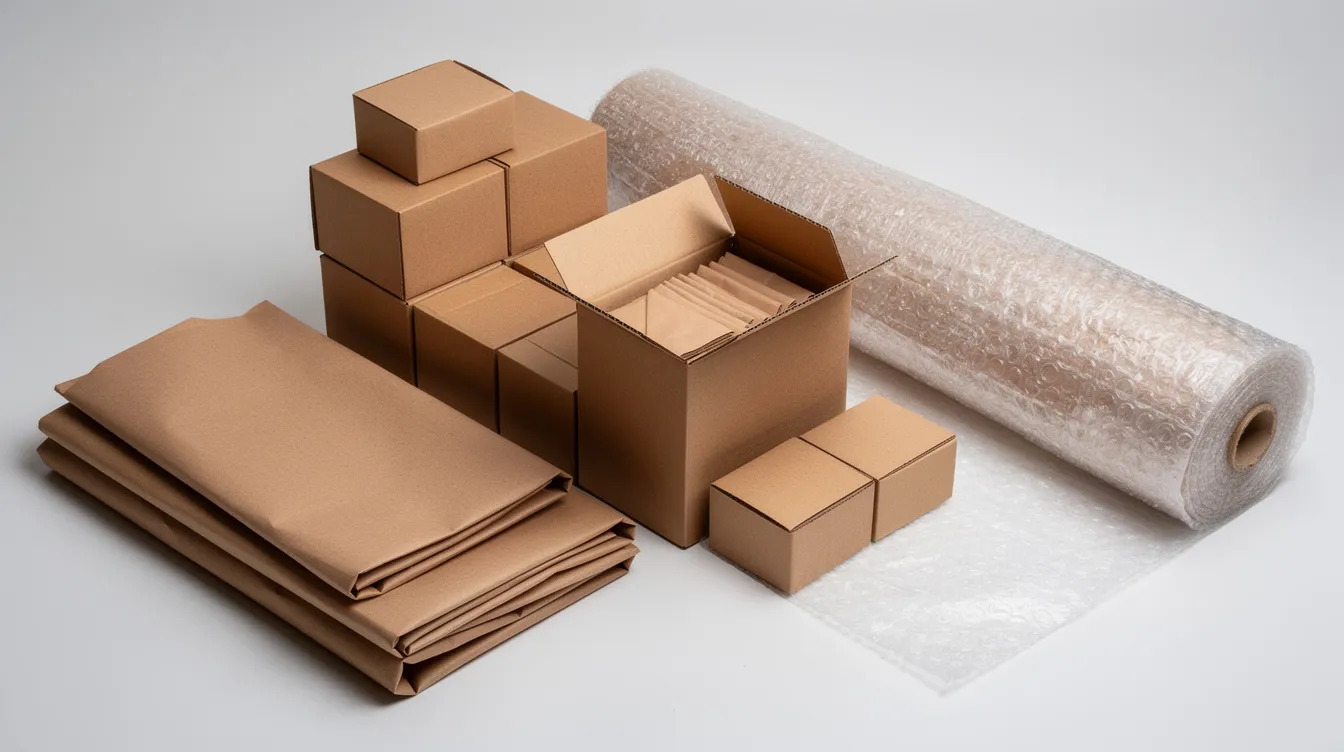
Test your packaging before you send anything to a real customer. Breakable items like mugs or glass ornaments need bubble wrap and strong boxes. Include the cost of packaging in your final prices. A small thank you card in each parcel adds perceived value and costs pennies.
You can offer free shipping on some items, but build that cost into the product price so you do not lose money. Set realistic processing times. If you say “dispatched within 2 business days” but actually take a week, customers will leave negative reviews. Keep buyers updated through Etsy messages if there is any delay, especially around Christmas and other big UK shopping dates. You can print shipping labels directly through Etsy or take parcels to your local post office.
10. Provide Great Customer Service and Build Reviews
On Etsy, feedback and customer reviews can make or break your shop’s performance. Reviews affect both your credibility with buyers and your visibility in Etsy search results.
Reply to customer questions within 24 hours where possible. Use polite, human language rather than copy pasted templates. Excellent customer service often leads to repeat orders and word of mouth, which costs less than constant Etsy Ads.
Include a simple thank you note or small business card in your parcels, gently asking happy customers to leave a review if they have a minute. Do not be pushy about it; a friendly line is enough.
When complaints come in, stay calm. Ask for photos if items are damaged and offer fair solutions such as replacements or partial refunds. Etsy’s Star Seller programme rewards fast responses, on time dispatch and high star reviews, all things that help your shop’s appearance in search. Great customer service turns one time buyers into new customers who come back and recommend you.
11. Promote Your Etsy Shop With Simple Marketing
Etsy brings traffic, but most sellers still need some of their own marketing to get regular sales and attract customers who might not find them through Etsy search alone.
Pick one main social media platform at first. Using social media platforms like Instagram and Pinterest can drive real traffic to your Etsy store. Post consistently about behind the scenes content, new launches, your creative process and real customer photos. Facebook groups in your niche can also help you connect with the Etsy community and potential customers. Do not spread yourself thin across six platforms; one or two well used channels usually beat many half hearted ones.
Etsy Ads increase visibility in Etsy search results and can be tested with a small daily budget once a listing is already getting some views. Use Etsy Ads to test which products convert best before spending money on broader advertising. Turn off poor performing ads quickly so you do not spend money with no return.
Offsite ads work differently. Etsy may promote your listings on platforms like Google and Facebook and charge an extra fee of 12% or 15% only when a sale comes directly from that advert. You can check your offsite ads performance in your shop manager. Offsite ads fees are based on your overall sales volume.
If you have your own website, a blog post like “how to choose the right size wall art” that links back to your Etsy shop can bring in search traffic over time. Email marketing also boosts customer loyalty and sales if you build a small mailing list of past buyers.
12. Keep Improving Your Shop as You Grow
Most Etsy sellers do not get everything right on day one. Tweaking listings is part of the process, not a sign of failure.
Check your Etsy shop stats regularly to see which search terms bring views, which listings get the most favourites, and where your customers are based. You can do this in your shop manager or on the Etsy seller app and the Etsy app on your phone.
Update weak listings every few weeks with new photos, clearer titles, better descriptions or adjusted pricing. Organise your products into clear shop categories so buyers can browse your shop easily. Try small tests rather than constant big changes; adjust one photo or price on a single listing and watch for two weeks before deciding.
Promoting products during seasonal trends can bring a real boost. Think ahead to UK dates like Mother’s Day, Black Friday, school terms and Christmas. Plan themed products or seasonal tags a month or two in advance so you are ready when buyers start searching.
Treat your Etsy shop as a slow growing online business, not a lottery ticket. Many successful Etsy shop owners built their income over months, not days. Small business owners who stick with it, keep improving and listen to their customers give themselves the best chance of steady, real income. Look through the Etsy homepage and the seller handbook for tips from the Etsy community as you grow, and remember that even other sellers started exactly where you are now.

Frequently Asked Questions
Do I Need a Business Licence to Start an Etsy Shop in the UK?
Etsy itself does not require a formal business licence to open a shop. Most new sellers simply register as self employed with HMRC once they are trading regularly, even if it starts as a side hustle. If you sell products with specific regulations, such as cosmetics, food or candles, you may need additional licences or insurance. Speak to HMRC or a qualified accountant if you are unsure about your own situation, especially for complex products or higher income.
How Much Money Do I Need to Start Selling on Etsy?
Many UK Etsy sellers start with under £100, especially if they already own basic tools or are selling digital downloads. Your main early costs are a few sets of materials, packaging, a handful of listing fees at £0.15 each, and a small buffer for postage and test orders. Start with a tiny product range and reinvest early profits into more stock rather than taking on debt for large bulk orders.
How Long Does It Usually Take to Get Your First Etsy Sale?
First sales can take anywhere from a couple of days to a few months depending on your niche, pricing, photos and Etsy SEO. Do not panic if nothing happens in the first few weeks. Improve your high quality photos, tweak titles and promote your listings on social media. Once a listing has a handful of sales and good reviews, it often becomes easier to sell more items in the same style.
Can I Run More Than One Etsy Shop at the Same Time?
Etsy allows multiple shops as long as you are honest about owning them. Running several shops is a lot of extra work, though. Beginners should keep just one Etsy shop until they have steady orders, because splitting attention often slows growth on both shops. If you do eventually open a second, each one will need its own branding, listings, payment account records and bills.
Is Etsy Still Worth It in 2026 With All the Fees and Competition?
Etsy is more crowded and fee heavy than it was a decade ago. That said, it still had 86.5 million active buyers at the end of 2025, giving small UK sellers access to a huge audience they would not reach alone. Etsy works best for unique, high quality products with clear branding rather than generic items found on large marketplaces. Treat Etsy as one part of your online business alongside an email list or your own website so you are not fully dependent on one platform’s rules. A successful shop takes time, but the opportunity is still real for sellers willing to put in the work.

Related Posts